Every business that writes checks eventually faces one of two situations. Either you received a check and forgot to deposit it, or you wrote a check that a vendor, contractor, or employee never cashed. Both situations involve the same legal question: how long is a business check actually valid?
The six-month rule under UCC Section 4-404 is the starting point, but the practical answer involves printed check notices, bank discretion, how you deposit the check, accounting entries, state unclaimed property law, and what to do when a check you issued has been sitting on someone's desk for months. This guide covers all of it from both sides of the transaction.
The 6-Month UCC Rule: How Long a Business Check Is Legally Valid
The legal foundation for check validity in the United States is UCC Section 4-404, part of the Uniform Commercial Code. The UCC is a set of commercial laws adopted in some form by all 50 states to standardize how banking and commercial transactions work. UCC 4-404 states that a bank is not obligated to honor a check presented more than six months after the date written on it.
Six months equals 180 calendar days from the check date. A check dated January 1 becomes stale on July 1. A check dated March 31 becomes stale on September 30. The date on the check face controls, not the date the check was mailed, received, or deposited.
Why Does a Business Check Say "Void After 90 Days" If Banks Still Honor It for 6 Months?
This is one of the most common questions business owners and recipients ask, and the confusion is understandable. The answer is that "void after 90 days" is a company policy printed on the check face, not a legal requirement enforced automatically by the bank.
What "void after 90 days" actually means
When a business prints "void after 90 days" on its check stock, it is telling the recipient: "Our internal policy considers this check invalid after 90 days. Please deposit it promptly." The business may have set up its bank account with a positive pay rule to match, in which case the bank will automatically flag checks presented after the 90-day window. Without that positive pay setup, the printed notice is a guideline the bank may or may not follow.
Why businesses use this notice even if banks don't enforce it
The 90-day notice serves the issuer's AP and payroll reconciliation. If a check has been outstanding for more than 90 days without being cashed, something has gone wrong: the check was lost, the payee changed banks, or there is a dispute. The notice encourages prompt deposit and gives the issuing company a defined trigger to investigate before the full six-month window expires.
What to do if you hold a check with this notice past 90 days
Contact the issuing company first. Explain that you have the original check and ask whether it is still honored. Do not try to deposit without checking, because if the issuer has set up positive pay to match the 90-day policy, your deposit will fail and you may be charged a returned check fee by your own bank. In most cases, the issuer will either confirm the check is still valid or issue a replacement.
How Long Different Types of Business Checks Stay Valid
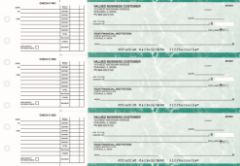
Manual AP checks from Checkomatic: standard business checks subject to the 6-month UCC validity window.
| Check Type | Standard Validity | Key Notes |
|---|---|---|
| Business AP check | 6 months (180 days) | UCC 4-404. "Void after 90 days" is a common printed notice but is not auto-enforced without positive pay. |
| Payroll check | 6 months (180 days) | Many employers print "void after 90 days." State unclaimed wage laws may require reissuance sooner. |
| Personal check | 6 months (180 days) | Same UCC rule as business checks. |
| Certified check | No fixed expiry | UCC 4-404 generally does not apply. May become subject to state abandoned property law after years. |
| Cashier's check | 60 days to no expiry, varies by state and bank | May become subject to state escheatment laws if held too long. |
| U.S. Treasury check | 1 year from issue date | Includes federal tax refunds and government benefit payments. Contact the issuing agency if expired. |
| State/local government check | Varies by state (6 months to 1 year) | Contact the issuing state agency for reissuance if expired. |
For more on certified checks and their specific rules, see certified check guide. For a full breakdown of all check types, see types of checks.
What Factors Determine Whether a Bank Will Cash a Stale Business Check
Banks that encounter a stale check typically consider several factors before deciding to honor or return it:
- Is the account still open? If the issuing company has closed the account, the check will be returned immediately. An open, active account is the first requirement.
- Are sufficient funds available? The bank needs to confirm the account balance covers the check amount at the time it is presented. An account that was well-funded when the check was written may have changed significantly months later.
- Is positive pay active? If the issuing company's account has positive pay configured, the bank will match the presented check against the issued check list and may automatically return any check older than the company's defined window.
- Does the check show signs of alteration? A check with altered dates, amounts, or payee names will be flagged regardless of age. Banks are trained to spot corrections or overwriting on check faces.
- How was the check presented? In-person teller deposits by non-customers receive the most scrutiny. Customer deposits at a branch receive moderate scrutiny. Mobile and ATM deposits receive the least (see next section).
- What is the account holder's relationship with the bank? Long-standing commercial customers with good standing may receive more flexibility on stale checks than new or occasional customers.
Will a Bank Notice the Date If I Deposit a Stale Check by Mobile App or ATM?
This is a question that comes up frequently in accounting and small business forums, and the honest answer is: possibly not initially, but that does not mean the check will clear.
Mobile deposit and ATM deposit systems process check images automatically. They typically do not flag stale check dates the way a human teller reviewing a physical check might. As a result, stale checks deposited via mobile app are more likely to be accepted by your bank during the initial deposit step.
However, this does not mean the check is safe. Here is what can still happen:
- Your bank accepts the mobile deposit and credits funds to your account (typically up to $225 the next business day under Regulation CC).
- Your bank sends the check image to the paying bank (the issuer's bank) for settlement.
- The paying bank reviews the check, identifies it as stale or spots a stop payment, and returns it unpaid.
- Your bank reverses the deposit and charges you a returned check fee.
The reversal can happen days after the initial credit appears. Do not spend funds from a deposited old check until you are confident it has fully settled. For how check clearing actually works, see how long does it take for a check to clear.
If I Found an Old Business Check, Can I Still Cash It?
It depends on how old it is and who issued it. Here is a practical guide by age:
| Check Age | Recommended Action |
|---|---|
| Under 30 days | Deposit immediately. No issues expected. |
| 30 to 90 days | Deposit. If the check face says "void after 90 days," do it before the 90th day or call the issuer first. |
| 90 days to 6 months | Call the issuer first if the check carries a void notice. Otherwise try depositing. Courtesy call is recommended regardless. |
| Over 6 months | Contact the issuer and request a replacement. If you still want to try depositing the original, try the issuing bank before your own bank. |
| Payroll check, any age | Contact your employer's payroll department. Most employers will reissue promptly. Some states require employers to reissue uncashed payroll checks regardless of age. |
Should I call the check writer before depositing an old check?
Yes, for any check that is older than 60 days. A quick call or email to let the issuer know you are depositing the check gives them the chance to confirm the account still has funds, confirm no stop payment has been placed, and avoid being caught off guard by a charge they had mentally written off. This is considered standard business courtesy and avoids a bounced check that is bad for both parties. See what happens when a check bounces for the full picture of what a returned check costs both sides.
What If My Bank Won't Cash a Stale Business Check?
If your bank declines to honor a stale check, you have two practical options before going back to the issuer for a replacement:
Option 1: Try the issuing bank
The bank that holds the issuer's account has direct visibility into whether the account is open and has funds. Unlike your own bank, which has to send the check through the payment system for settlement, the issuing bank can verify these facts immediately. Presenting an old check in person at the issuing bank's branch (not your bank, the check writer's bank) is sometimes more successful than depositing through your own bank, because the issuing bank can confirm on the spot whether it will honor the check.
Option 2: Contact the issuer for a replacement
If both banks decline, the most reliable path is to contact the person or company that wrote the check and request a new one. Explain that the original went uncashed, confirm they still owe the amount, and ask them to issue a replacement. The issuer will typically place a stop payment on the original check before issuing the new one. See lost checks and check replacements guide.
What to Do When a Check Your Business Wrote Has Not Been Cashed
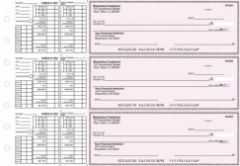
Manual payroll checks from Checkomatic: uncashed payroll checks may trigger state unclaimed wage reporting obligations if not addressed promptly.
Most articles on this topic are written for the person who received a check and wants to know whether they can still cash it. But Checkomatic's customers are businesses that write checks. Here is the issuer's step-by-step guide.
Step 1: Verify the check is actually outstanding (60-day mark)
Check your register, accounting software, or bank statement to confirm the check has not already cleared. A check you believe is uncashed may have been processed without you noticing. If it has not cleared, it will appear as an outstanding item in your bank reconciliation. Run a check aging report in your accounting software (in QuickBooks: Reports, then Banking, then Outstanding Checks) to see all checks older than 60 days at once.
Step 2: Contact the payee (60 to 90-day mark)
A phone call or email to the vendor, contractor, or employee usually resolves the situation quickly. Common explanations: the check was lost in the mail, the payee changed banks and forgot to deposit, or the check is sitting in a pile of unfiled paperwork. In most cases, the payee deposits the original check once reminded.
Step 3: Place a stop payment and reissue (approaching 90 days or 6 months)
If you cannot reach the payee, or if the payee confirms the check is lost, place a stop payment with your bank and issue a new check with a new check number. Stop payments typically cost $30 to $35 and last six months. Full guidance is at how to stop payment on a check.
Step 4: What if the vendor says they cashed it but it's still outstanding?
This is a situation bookkeepers encounter regularly. A vendor claims payment, your bank shows the check has not cleared, and neither side can immediately reconcile the discrepancy. Steps: request the vendor show you proof of deposit (deposit slip or bank statement showing the credit). Check with your bank whether the check was presented and returned for any reason. If the vendor cannot produce proof of deposit, the check was not cashed. Issue a stop payment and reissue. If your bank confirms it was presented and returned, the vendor's bank returned it , they will need to re-present or accept a replacement check.
How to Handle Stale Checks in Your Business Accounting Records
An uncashed check sits as an outstanding item in your bank reconciliation and as a liability on your books (accounts payable, wages payable, or a similar account). You cannot simply delete it or credit it back to income without first considering two things: whether the payee can still collect, and whether your state's unclaimed property law applies.
The accounting entry when you void a stale check and will not reissue
If you have confirmed the payee no longer needs payment (the vendor went out of business, the contractor release was signed, etc.) and your state's dormancy period has not triggered escheatment, you can void the check and reverse the original entry:
- Debit the original expense or AP account (reverses the original debit to expense)
- Credit the bank or cash account (restores the cash balance)
- Mark the check as voided in your check register
The accounting entry when you reissue a stale check
When you place a stop payment on the old check and issue a new one:
- Void the old check in your accounting software (marks the original entry as canceled)
- Issue the new check as a fresh transaction with a new check number
- Record the stop payment fee as a bank charge
Do not credit stale check amounts back to income without checking escheatment rules
A common bookkeeping mistake is to void an old uncashed check and credit the amount back to operating income or accounts payable without checking whether the funds need to be remitted to the state. Most states require businesses to hold unclaimed funds for a dormancy period (typically 3 to 5 years from the check date) before the business is legally allowed to reclaim them. See the escheatment section below. For check register and reconciliation guidance, see check validity and fraud prevention guide.
Stop Payment on an Uncashed Business Check
A stop payment is the only way to actively prevent a specific check from being honored, regardless of age. Here is what you need to know:
- What it requires: Check number, check date, exact payee name, and exact dollar amount. Banks need all four to match correctly.
- Cost: Typically $30 to $35 per check at most banks.
- Duration: Usually six months, after which it must be renewed if the check has still not surfaced.
- What it does not do: It does not cancel the underlying debt. If you owe a vendor $500 and stop the check, you still owe $500 and should reissue.
- What happens if the stop expires: If a stop payment expires after six months and the old check eventually surfaces, the bank may process it. Renew stops on old missing checks as long as the account remains open.
See how to stop payment on a check for the complete step-by-step guide.
Uncashed Business Checks and State Unclaimed Property Law
Every US state has an unclaimed property law requiring businesses to turn over certain unclaimed funds to the state after a defined dormancy period. Business checks that remain uncashed and unresolved for too long fall into this category.
What is escheatment?
Escheatment is the process of transferring unclaimed funds to the state. If a vendor never cashes a check you issued and you cannot locate that vendor after a reasonable period, state law may require you to remit the check amount to the state's unclaimed property fund. The state holds the funds until the rightful owner (the payee) claims them.
When does a business check trigger escheatment?
Dormancy periods vary by state but typically range from three to five years from the date the check was issued. Some states use shorter periods for payroll checks. The dormancy clock generally starts from the check date (or the date the check was due to be paid).
What businesses must do
Most states require annual unclaimed property reports listing outstanding checks and other abandoned property. If a check in your AP ledger has been uncashed past the state's dormancy period, you may be legally required to submit those funds to the state rather than voiding the check and crediting income. Failing to file can result in interest, penalties, and state audits.
The practical takeaway: do not automatically write off uncashed old checks without consulting your accountant or state comptroller's office. You can search for unclaimed property records and find state filing resources at unclaimed.org, the NAUPA official unclaimed property resource.
Post-Dated Checks: A Related But Different Issue
A post-dated check is one that carries a future date. For example, writing a check on September 1 but dating it October 1. The intention is that the payee should not deposit it until October 1. This is different from a stale check (which is dated in the past).
Under the UCC, banks are generally permitted to pay a post-dated check before the date on the check unless the account holder has given the bank advance notice not to honor it early. This means:
- If a recipient deposits your post-dated check early, your bank may process it
- If the account does not have funds on the early deposit date, the check may bounce even though you intended to fund the account by the written date
- To protect against early deposit, notify your bank in writing before the check is presented
For businesses writing checks to cover future obligations, ACH transfers with a set future date are a more reliable alternative to post-dated checks. See check vs ACH payment: which is better for your business.
How Positive Pay Protects Your Business from Stale Check Fraud
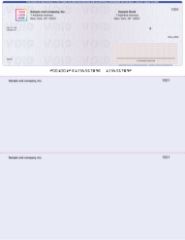
Check-on-top business checks from Checkomatic, commonly used by businesses with positive pay to control exactly which checks their bank will honor.
Positive pay is a bank service where the issuing company sends a list of issued checks to the bank each time checks are printed. When a check is presented for payment, the bank matches it against the issued list. A check that does not match on number, amount, payee, or date is flagged for review or returned automatically.
For stale check management, positive pay gives you specific control:
- Configure the system to automatically return checks older than 90 days (enforcing your "void after 90 days" policy even without a human reviewing each check)
- Block checks that have check numbers you never issued
- Stop duplicates (same check number presented twice)
- Flag amount discrepancies down to the cent
Without positive pay, a stale check that surfaces after a stop payment has expired could still be processed by your bank. With positive pay active and a 90-day date rule configured, it is blocked automatically. For the full guide, see what is positive pay and how does it work.
Check Security Features That Protect Checks While They Sit Uncashed
A check that sits uncashed for weeks or months is a fraud target. Check washers look for checks in transit or held by recipients for extended periods, because an uncashed check is less likely to have been reconciled and more likely to go undetected if the payee or amount is altered. Every Checkomatic business check includes six ABA-compliant security features at no extra charge:
- Chemical-reactive paper: Stains visibly if washing solvents are applied.
- Microprint signature line: Text that blurs on any photocopy, flagging counterfeits.
- Void pantograph: VOID appears when the check is photocopied or scanned.
- Heat-sensitive ink: Disappears under a warm thumb press.
- Coin-reactive ink: Changes appearance when rubbed with metal.
- True watermark: Visible from both sides under light.
See are business checks safe: security features that actually matter and check washing guide for the complete fraud protection picture.
Also note: if your business uses printed check stock and wants to enforce a 90-day cashing window, you can have "void after 90 days" printed directly on your check stock at the time of order. This printed notice, combined with a positive pay setup at your bank, gives you the strongest possible control over when your checks can be cashed. See all formats at business checks.
How This Differs from How Long a Check Takes to Clear
These are two completely separate questions with different governing laws.
How long to cash a business check is about validity , how long the check remains negotiable before a bank can refuse it. Governing law: UCC Section 4-404. Answer: six months.
How long for a check to clear is about processing speed , how fast funds become available after the recipient deposits the check. Governing law: Regulation CC (Expedited Funds Availability Act). Answer: typically one to two business days for most business checks.
See how long does it take for a check to clear and how long do business checks take to clear.
What Customers Say About Checkomatic
All reviews below are published on checkomatic.com and reproduced verbatim. Source: checkomatic.com/quickbooks-starter-pack-product, 4.5 stars from 166 verified reviews.
"Been with them for 15 years. Always reliable, always good quality, good service. What more can you ask for?"
ATV Inc. | ★★★★★ 5/5 | April 5, 2024 | Source: checkomatic.com/quickbooks-starter-pack-product
"First time ordering and I am super impressed with the quality of the checks. No issues with delivery. I will be ordering again!"
TClinton | ★★★★★ 5/5 | April 9, 2025 | Source: checkomatic.com/quickbooks-starter-pack-product
"We use CheckoMatic for all of our check needs! They have great prices and we receive our products in a timely manner!"
CG's Tax Service | ★★★★★ 5/5 | September 18, 2024 | Source: checkomatic.com/quickbooks-starter-pack-product
"I got 500 checks for less than half of what the bank wanted for 200!"
VVA Voucher Checks (Vietnam Veterans of America) | ★★★★★ 5/5 | July 6, 2024 | Source: checkomatic.com/quickbooks-starter-pack-product
"ASJ Wilson Construction has been a client of checkomatic for some years now and they've never disappointed this company. Thank you checkomatic for all that you do."
ASJ Wilson Construction | ★★★★★ 5/5 | June 6, 2024 | Source: checkomatic.com/quickbooks-starter-pack-product
"Affordable and efficient. My go-to business check printer."
Doe | ★★★★★ 5/5 | January 24, 2025 | Source: checkomatic.com/quickbooks-starter-pack-product