-
 Contact Us
-
 Re order
-
 Log in
-
 Cart 0
You have no items in your shopping cart.
Petty Cash: How to Set Up, Track and Replenish a Fund
A courier needs a tip, the office runs out of stamps, or someone grabs coffee for a client meeting. Writing a check for a few dollars makes no sense, yet loose cash with no records turns into a bookkeeping headache by the end of the month.
A petty cash fund solves that, as long as it is set up with clear rules. This guide covers what petty cash is, how to start the fund with a check, what a voucher should show, the journal entries, how to replenish and count the box, and the controls that keep it honest.
Quick Summary
Petty cash is a small amount of cash a business keeps on hand for minor expenses. Most businesses run it as an imprest fund: a fixed balance is set up with one check, every payout is backed by a voucher and receipt, and a replenishment check restores the fund to the same total. The Petty Cash account itself only changes when the fund size changes.
Key points
- Petty cash is for small payments. IRS Publication 583 describes it as a way to make small payments without writing checks for small amounts.
- Start and refill the fund by check. Make the check out to the custodian or to "Petty Cash", never to "Cash", which the IRS says to avoid.
- Every payout needs a slip. The IRS says to make out a petty cash slip and attach it to the receipt.
- Cash plus vouchers should equal the fund. Any gap goes to a Cash Over and Short account.
- Replenish at month end. Refilling at the close of each period puts expenses in the right period.
- Separate the duties. The person who holds the cash should not approve their own replenishment.
| Event | Debit | Credit | Paper trail |
|---|---|---|---|
| Set up the fund | Petty Cash | Cash (bank) | Opening check and its stub |
| Replenish the fund | Each expense account, plus Cash Over and Short if short | Cash (bank) | Vouchers, receipts and the replenishment check |
| Increase the fund | Petty Cash | Cash (bank) | Approval and a new check |
| Decrease the fund | Cash (bank) | Petty Cash | Deposit slip for the returned cash |
| Close the fund | Cash (bank) | Petty Cash | Final count and deposit |
Table 1. Petty cash entries under the imprest method, as taught in open accounting textbooks. Confirm your own setup with your accountant. Related: checkbook management.
Setting up a petty cash routine for your office? Ask our team which checks with stubs make each replenishment easy to record.
In this guide
- What is petty cash and why do businesses use it?
- How do you set up a petty cash fund?
- How much should a petty cash fund hold?
- What should a petty cash voucher show?
- What journal entries does petty cash need?
- How do you replenish petty cash?
- How do you count and reconcile petty cash?
- What controls keep petty cash safe?
- How long should you keep petty cash records?
- Frequently asked questions
What Is Petty Cash and Why Do Businesses Use It?
Petty cash is a small fund of physical cash a business keeps to pay for minor, everyday expenses that are not worth a check or a card transaction. IRS Publication 583 says a petty cash fund allows you to make small payments without having to write checks for small amounts.
Typical uses are postage, a delivery tip, small office supplies or a parking fee. The fund is usually run as an imprest fund, meaning it always returns to the same fixed total after each replenishment.
Is petty cash an asset?
Yes. Petty cash is a current asset and is reported as part of cash on the balance sheet. The money in the box still belongs to the business; it has only moved from the bank account to a lockbox. The expenses are recorded when the fund is replenished.
What should petty cash not be used for?
University and state petty cash policies we reviewed share a short list of exclusions:
- Wages or contractor pay, which belong in payroll or accounts payable.
- Loans, advances or IOUs to staff.
- Cashing personal or payroll checks for anyone.
- Invoices from vendors, which should be paid by check or electronic payment.
- Splitting one purchase to get under a per-purchase cap.
How Do You Set Up a Petty Cash Fund?
To set up a petty cash fund, choose a fixed amount and one custodian, write a check from the business account to start the fund, cash it, and store the money in a locked box with a supply of vouchers. Record the opening entry as a debit to Petty Cash and a credit to your bank account.
- Decide the fund size. Base it on about one month of small expenses.
- Name one custodian. One person holds the key and answers for the balance.
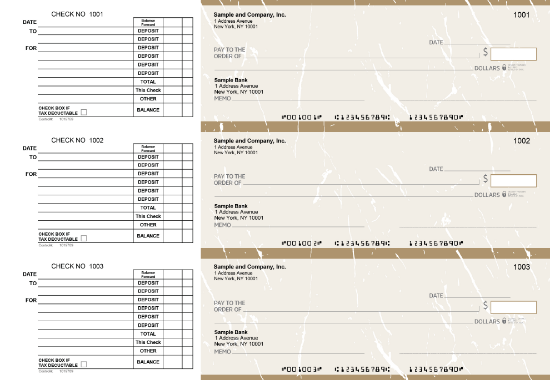
- Write the opening check. Make it payable to the custodian or to "Petty Cash".
- Cash the check and lock the money away. Keep the box in a locked drawer or safe.
- Set out vouchers and a log. Every payout gets a slip, and the log keeps a running total.
- Write the rules down. List what the fund can pay for, any per-purchase cap and the count schedule.
How do you write the check that starts a petty cash fund?
Write the check to a named payee, not to "Cash". IRS Publication 583 says to avoid writing checks payable to cash. Open accounting textbooks show the check made payable to the petty cash custodian, and other accounting guides use "Petty Cash" as the payee.
| Check field | What to write | Why |
|---|---|---|
| Pay to the order of | The custodian's name or "Petty Cash" | A named payee shows who received the money |
| Amount | The approved fund size | It must match the entry in your books |
| Memo | "Establish petty cash fund" or "Replenish petty cash, vouchers 1 to 14" | Explains the payment to anyone reviewing the account |
| Signature | An authorized signer other than the custodian | Keeps approval separate from custody |
| Stub or register | Date, amount, purpose and the voucher range | Links the check to the receipts it covers |
Table 2. A field by field guide to the opening and replenishment checks. For general check writing steps, see how to write a business check.
How Much Should a Petty Cash Fund Hold?
A petty cash fund should hold roughly what you spend on small items between replenishments, and no more. There is no IRS dollar limit for petty cash. Published institutional policies give useful benchmarks for keeping the fund small.
| Policy | Fund size | Per-purchase cap | Replenish |
|---|---|---|---|
| Harvard University | $500 for minor office expenses | Generally $50 | At least quarterly |
| University of Houston System | $500 maximum | $100 per transaction, no splitting | Month end once spending passes $50, and by fiscal year end |
| Georgia College | Sized to purchase volume | Under $35 per item; higher needs approval | At least quarterly |
| State of Maine | Kept minimal, at least $50 | Within state limits | At least monthly |
| University of Oklahoma | Only with proven need | Small, infrequent purchases | At least monthly |
Table 3. Petty cash limits from published institutional policies, reviewed October 2026. These are examples for comparison, not rules for private businesses.
How do you increase or decrease a petty cash fund?
To increase the fund, write a new check for the extra amount and record a debit to Petty Cash and a credit to Cash. To decrease it, deposit the surplus back into the bank and record the reverse entry. These are the only times the Petty Cash account itself changes under the imprest method. Use a business deposit slip for the returned cash.
What Should a Petty Cash Voucher Show?
A petty cash voucher is the form that shows proof of a petty cash payment. It should name who was paid, the amount, the date, what was bought and why, and who approved it, with the receipt attached. IRS guidance says expense documents should identify the payee, the amount paid, proof of payment, the date and a description.
- Voucher number, pre-numbered so gaps are obvious.
- Date of the purchase.
- Payee, the store or person paid.
- Amount in figures.
- Business purpose and account, such as "postage, client mailing".
- Signatures of the person who received the cash and the custodian.
- Receipt attached, or a written explanation when no receipt exists.
What Journal Entries Does Petty Cash Need?
Petty cash needs an entry when the fund is set up, each time it is replenished, and whenever its size changes or it is closed. Individual payouts are not recorded one by one in the general ledger; the vouchers are summarized at replenishment.
Here is the worked replenishment example used in an open accounting textbook (Edwards and Hermanson, via Lumen Learning). The fund was short $1.30 when counted.
| Account | Debit | Credit |
|---|---|---|
| Delivery Expense | 22.75 | |
| Postage Expense | 50.80 | |
| Receivable from Employees | 19.05 | |
| Cash Short and Over | 1.30 | |
| Cash (replenishment check) | 93.90 |
Table 4. A replenishment entry with a shortage, in dollars. The check for 93.90 restores the box to its fixed amount. Keep the check stub with the voucher summary in your check register.
Why do some guides debit Petty Cash when replenishing?
Some guides and software record each payout as a credit to Petty Cash as it happens, then debit Petty Cash when the fund is refilled. The textbook imprest method skips that step and debits the expenses directly at replenishment. Both reach the same balances; pick one and use it every time so your records stay consistent.
What is the Cash Over and Short account?
Cash Over and Short absorbs small differences between the count and the vouchers. A shortage is a debit and works like an expense. An overage is a credit and works like income. Frequent or large differences point to a control problem, not a rounding issue.
How Do You Replenish Petty Cash?
To replenish petty cash, total the vouchers, count the remaining cash, write one check for the amount spent, and record the expenses from the voucher summary. Replenishing at the end of each accounting period, even if the box is not empty, makes sure the expenses are recognized in the right period, as the OpenStax accounting text explains.
- Total the vouchers by expense account.
- Count the cash left in the box.
- Compare. Cash plus vouchers should equal the fund amount; note any difference.
- Get approval from someone other than the custodian.
- Write the replenishment check for the amount spent, with the voucher range in the memo.
- Record the entry and file the vouchers with the check stub.
- Cash the check and return the fund to its fixed total.
What does "a petty cash fund is always replenished" mean?
It means the fund is refilled at the end of every period so it starts each period at its fixed amount, and so every expense paid from it reaches the books in the period it happened. It is a standard accounting rule for imprest funds, and a common textbook quiz question.
How Do You Count and Reconcile Petty Cash?
To reconcile petty cash, count the cash, add up the vouchers, and confirm the two together equal the fund's fixed amount. Write the result on a count sheet signed by the custodian and the person who counted.
Policies we reviewed set clear schedules. The University of Houston System calls for surprise counts and at least one audit a year. The University of Oklahoma requires surprise counts at least quarterly and monthly reconciliation. The University of Hawaii has custodians count weekly, with an unannounced count by the fiscal officer at least once a year, and its count includes any uncashed replenishment checks.
- List each denomination of bills and coins.
- List each voucher by number and amount.
- Include uncashed replenishment checks as part of the total.
- Record any difference and its likely cause.
- Sign and date by both people present.
What Controls Keep Petty Cash Safe?
The controls that keep petty cash safe are a single custodian, locked storage, numbered vouchers, separate approval of replenishments and counts by someone other than the custodian. The GAO's internal control standards note that segregation of duties helps prevent fraud, waste and abuse, and that management periodically counts assets such as cash.
- One custodian per fund. Shared boxes make shortages impossible to trace.
- Approval kept separate. Harvard's policy says a custodian may not approve their own replenishment.
- Locked storage. Limit access to cash, as the GAO standard recommends.
- No personal check cashing. Several policies ban using the fund to cash checks or make change.
- Surprise counts. Smaller businesses that cannot separate every duty can rely more on periodic counts.
When should a business stop using petty cash?
Consider a company card instead when several people need the fund, shortages keep recurring, or most vendors take cards. Harvard's controller office, for example, steers staff to purchasing cards where possible. For money staff spend from their own pockets, an employee reimbursement check is often cleaner than a cash payout.
How Long Should You Keep Petty Cash Records?
Keep petty cash vouchers, receipts and replenishment check records for as long as the IRS could examine the return they support, which is generally 3 years. The IRS sets longer periods in some cases: 4 years for employment tax records, 6 years if income was underreported by more than 25 percent, and 7 years for a bad debt or worthless securities claim.
IRS guidance lists canceled checks and receipts among the supporting documents a business should keep, and Publication 583 suggests making payments by check to document business expenses. Our guide to how long to keep check registers and records covers storage, and a check register walkthrough shows how to log each replenishment.
Keeping Petty Cash Tidy From the First Check
Checks with stubs. Our manual business checks leave room to note the voucher range on every replenishment.
Deposit slips for surplus cash. When a fund shrinks or closes, a deposit slip documents the money going back to the bank.
Envelopes for the box. Coin envelopes keep change and receipts sorted between counts.
About the Author
This guide is the Checkomatic team's work, written for small business owners and bookkeepers who manage day to day spending. Sources include IRS Publication 583 and IRS recordkeeping guidance, the GAO Standards for Internal Control in the Federal Government, open accounting textbooks from Lumen Learning and OpenStax, and published petty cash policies from Harvard University, the University of Houston System, the University of Oklahoma, Georgia College, the University of Hawaii and the State of Maine.
This is general information, not tax or accounting advice. Ask your accountant how to set up and record petty cash for your business.
Frequently Asked Questions
Is petty cash an expense?
Why is it called petty cash?
Can I write a petty cash check payable to Cash?
What if there is no receipt for a petty cash purchase?
Who should be the petty cash custodian?
How often should petty cash be replenished?
What happens if petty cash is over?
Can petty cash be used to pay employees?
Should petty cash appear on the bank reconciliation?
What is the difference between petty cash and cash on hand?
Accepted by the world’s leading banks